Amazon Private Label 2026: How to Build Your Own Brand and Grow on Amazon
Amazon Seller Strategy

Amazon Private Label 2026: How to Build Your Own Brand and Grow on Amazon

Written by Naveen Kumar Nutheti
6 April, 2026|14 min read
Share

Amazon private label india is one of the most practical ways to build a long-term business on Amazon today. Instead of selling the same product as everyone else, you take something that already sells and create your own branded version of it. That shift — from reselling to owning — changes how you compete. The outcome depends heavily on how well you choose your product and execute your launch. This guide explains the process in a way that is realistic to follow.

Key Takeaways
Amazon private label is a business model where you sell products under your own brand instead of reselling others.
You control branding, pricing, and positioning — making it one of the most practical ways to build a long-term business on Amazon.
Success depends on product selection, supplier quality, and how well you execute your launch.

What Is Amazon Private Label and How It Differs from Reselling

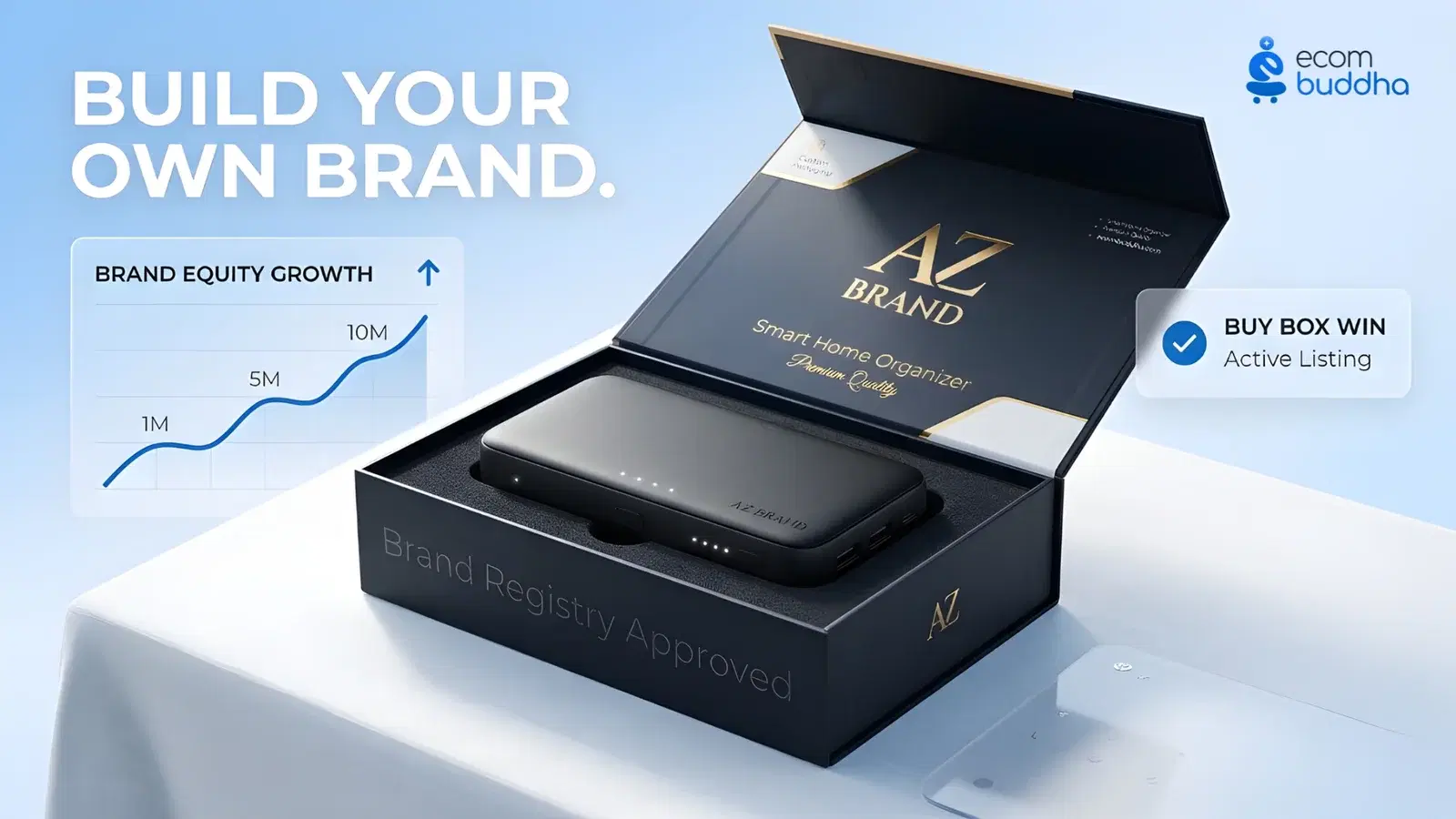
Amazon private label india is a model where you source an existing product, apply your own branding, and sell it under your brand name on Amazon. You are not creating something new from scratch — you are taking something people already buy and positioning it as yours. You build your own listing, control pricing, and accumulate your own reviews over time.
FactorResellingPrivate Label
Brand controlNone — you sell existing brandsFull — your own brand name
Listing controlShared with other sellersYour own listing
Pricing flexibilityLimited — driven by competitionYou set the price
DifferentiationVery difficultPossible through branding
Long-term assetNoYes — brand equity builds over time
With reselling, price becomes the primary lever because the product, images, and title are identical across all sellers. With private label, you control everything — the listing, images, pricing, and messaging. Instead of reacting to what competitors do, you shape the buying decision directly. The tradeoff: private label requires better execution at every stage. Your margins depend on product choice, sourcing cost, listing quality, and launch planning — not just what you paid for the product.

What AmazonBasics Teaches You and How to Start

AmazonBasics is Amazon's own private label brand — cables, chargers, batteries, kitchen tools, home essentials. Amazon did not invent new product categories with AmazonBasics. It identified what already sells in high volume, created its own version, and sold it at a competitive price under its own brand. That is the private label model working at scale. The lesson: private label success comes from aligning with existing demand, maintaining consistent quality, and positioning clearly. You do not need a unique invention.
If you are figuring out how to start private label on amazon, the process is structured but depends entirely on execution at each stage:
Product research — identify products with consistent, stable demand and manageable competition
Supplier identification — find manufacturers who can produce the product to your specifications
Sample review — order samples, test quality, confirm production standards
Branding — create your brand name, logo, and packaging design
Listing creation — build your Amazon listing with optimised title, bullets, images, and A+ content
Launch — send inventory to FBA and run initial advertising to build visibility and reviews
Iterate — monitor performance, gather feedback, and improve over time
Most beginners fail at Step 1 by choosing products based on what looks exciting rather than what has proven demand with room for a new entrant. Spending an additional week on product research consistently produces better outcomes than rushing to launch.
Let Your Product Page Do The Selling
Try EcomBuddha

How to Choose the Right Product and What It Costs

Product selection is where most private label outcomes are determined. The goal is not to find a winning product — it is to find a stable opportunity: a category with consistent demand, manageable competition, and room for a new brand.
What to Look For
Consistent monthly sales — stable BSR over 90 days, not seasonal spikes
No dominant brand in the top positions — if the top 3 results are all the same recognisable brand, entry is difficult
Mid-range pricing (₹500–₹2,500) — leaves room for branding investment and profit margin
Lightweight and non-fragile — reduces FBA fees and transit damage
Everyday-use categories — kitchen tools, home organisers, fitness accessories, stationery
What to Avoid
Highly saturated categories where established brands dominate
Seasonal or trend-driven products — demand is unpredictable
Fragile or bulky products — higher fees and return rates
Products requiring certifications or regulatory approval in India
What It Costs
Cost CategoryWhat It CoversTypical Range (India, 2026)
Product / InventoryFirst batch from supplier₹30,000–₹1,50,000 depending on product and MOQ
Packaging / BrandingCustom packaging, logo, labels₹5,000–₹25,000 for initial design and print
Amazon Seller AccountProfessional account fee₹499/month
FBA FeesFulfilment, storage, returns₹35–₹150 per standard unit
AdvertisingSponsored Products for launch₹10,000–₹30,000 for initial launch phase
Listing / PhotographyProfessional images and copy₹5,000–₹20,000 for quality images
Starting small is more effective than starting big for a first private label product. A small first batch lets you test whether your listing converts and whether the product generates reviews before committing to larger inventory.

Step-by-Step Launch Process and Mistakes to Avoid

Once your product is sourced, branded, and ready, the launch follows a consistent pattern. How well each step is executed determines how quickly the product gains traction.
The Launch Process
Build your listing before inventory arrives — title with primary keyword in the first 40 characters, all 5 bullets complete, professional images meeting Amazon India's 1,000px minimum
Send inventory to FBA — apply FNSKU labels to every unit, follow the shipment creation workflow accurately to avoid receiving delays
Run Sponsored Products ads from day one — new listings have no sales history and no organic rank; start with automatic targeting, move to manual campaigns after 2–3 weeks of data
Build reviews systematically — use Amazon's Request a Review button for every order; do not offer incentives in exchange for reviews
Monitor and adjust weekly — track ACoS, conversion rate, and BSR for the first 60 days; conversion below 10% usually means a listing issue, not a traffic issue
Common Mistakes to Avoid
Choosing saturated products — categories where top sellers have thousands of reviews and a single brand holds 3+ of the top 10 positions are very difficult to enter profitably
Underestimating total cost — Amazon referral fee (8–12% for most categories), FBA fee (₹35–₹150 per unit), and ad spend must all be included; sellers underestimate total cost by 20–35% on average
Weak listing quality — customers decide within seconds based on main image and title; listings with fewer than 4 high-quality images consistently underperform
No launch plan — products don't gain organic rank without initial velocity; a launch combines Sponsored Products ads, review requests, and if applicable, Amazon Vine for new products
Amazon private label india is not about finding something new — it is about building your own version of something that already works. Start with thorough product research, approach your first launch with a clear plan, and focus on execution. Private label businesses that grow steadily are almost always ones that started small, learned from the first product, and improved from there.

Frequently asked Questions

Naveen Kumar Nutheti

Naveen Kumar Nutheti is a seasoned e-commerce strategist with 12+ years of experience across India and the Middle East. He has scaled businesses past ₹1,000 Cr in annual revenue and consults brands including Godrej, Nippon Paint, Kohler, Havells, Taparia, and Birla Opus on e-commerce sales strategy and product listing optimisation. He is the founder of EcomBuddha, an AI-powered listing intelligence platform for Amazon India sellers.

© Digicom Buddha Tech pvt ltd. All rights reservedPrivacy PolicyTerms of Service